
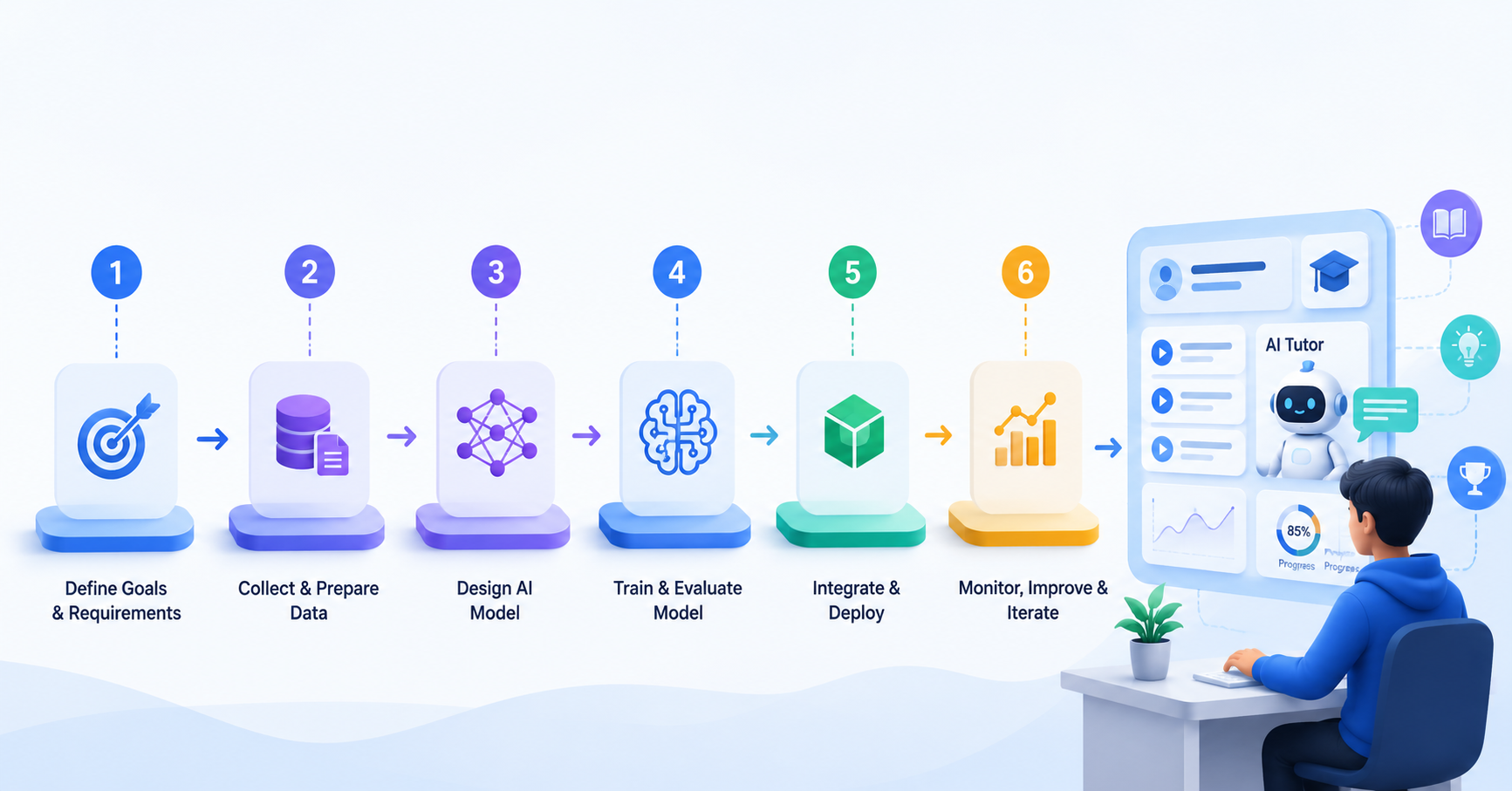
Step-by-Step Guide to Building an AI-Powered Learning System
With the integration of artificial intelligence (AI) in various sectors, educational technologies have seen transformative changes. An AI-powered learning system can personalize education, provide adaptive learning features, and enhance student engagement through interactive and tailored experiences. This guide will walk you through the steps to build an AI-powered learning system from scratch.
Step 1: Define Your Objectives
Before diving into the technical details, it’s crucial to define what you want your AI-powered learning system to achieve. Are you focusing on K-12 education, higher education, or corporate training? Do you want to improve learning outcomes, increase engagement, or provide support for special education needs? Clear objectives will guide your project’s scope and the technologies you choose.
Step 2: Gather and Prepare Your Data
Data is the backbone of any AI system. For a learning system, this could include student performance data, educational content, interactive activities, and user feedback. You'll need to collect, clean, and organize this data. Ensuring privacy and compliance with data protection regulations such as GDPR is also critical.
Step 3: Choose the Right AI Technologies
Several AI technologies can be employed in building learning systems, including machine learning, natural language processing (NLP), and computer vision. Machine learning can personalize learning paths based on student performance, while NLP can analyze text to provide feedback on written assignments. Decide which technologies align best with your objectives.
Step 4: Develop a Prototype
Start with a simple prototype to test your concept. Use tools like TensorFlow or PyTorch for machine learning models, and APIs such as IBM Watson for NLP tasks. This prototype should focus on core functionalities like content recommendation algorithms or question-answering systems.
Step 5: User Interface and Experience
The user interface (UI) is crucial as it affects how users interact with your system. The UI should be intuitive and engaging for learners. Consider the user experience (UX) in terms of accessibility and ease of use, especially for younger audiences or those with special needs.
Step 6: Test and Iterate
After initial development, conduct thorough testing with real users to gather feedback and identify any issues. Use this feedback to refine your system. Testing should be ongoing even after the system is deployed to improve and update the learning algorithms based on new data and feedback.
Step 7: Implement Analytics to Monitor Performance
Implementing analytics will help you monitor how well your AI-powered learning system is performing. Metrics to consider include user engagement, learning outcomes, and system responsiveness. Use this data to continually improve the system.
Step 8: Ensure Scalability and Security
As your user base grows, your system needs to scale accordingly. Cloud services like AWS or Google Cloud offer scalable infrastructure to handle increased loads. Security is also paramount, as the system will handle sensitive educational data. Ensure that data is encrypted and access is secure.
Conclusion
Building an AI-powered learning system is a complex but rewarding venture that can significantly impact educational outcomes and accessibility. By following these steps, you can create a robust, scalable, and effective learning system that leverages the full potential of AI technologies. Remember, the key to success in such projects lies in continuous learning and adaptation, not just during the development phase but throughout the lifecycle of the system.
For more insights and resources on building educational technologies, visit learningamplified.ai .


Comments (0)