
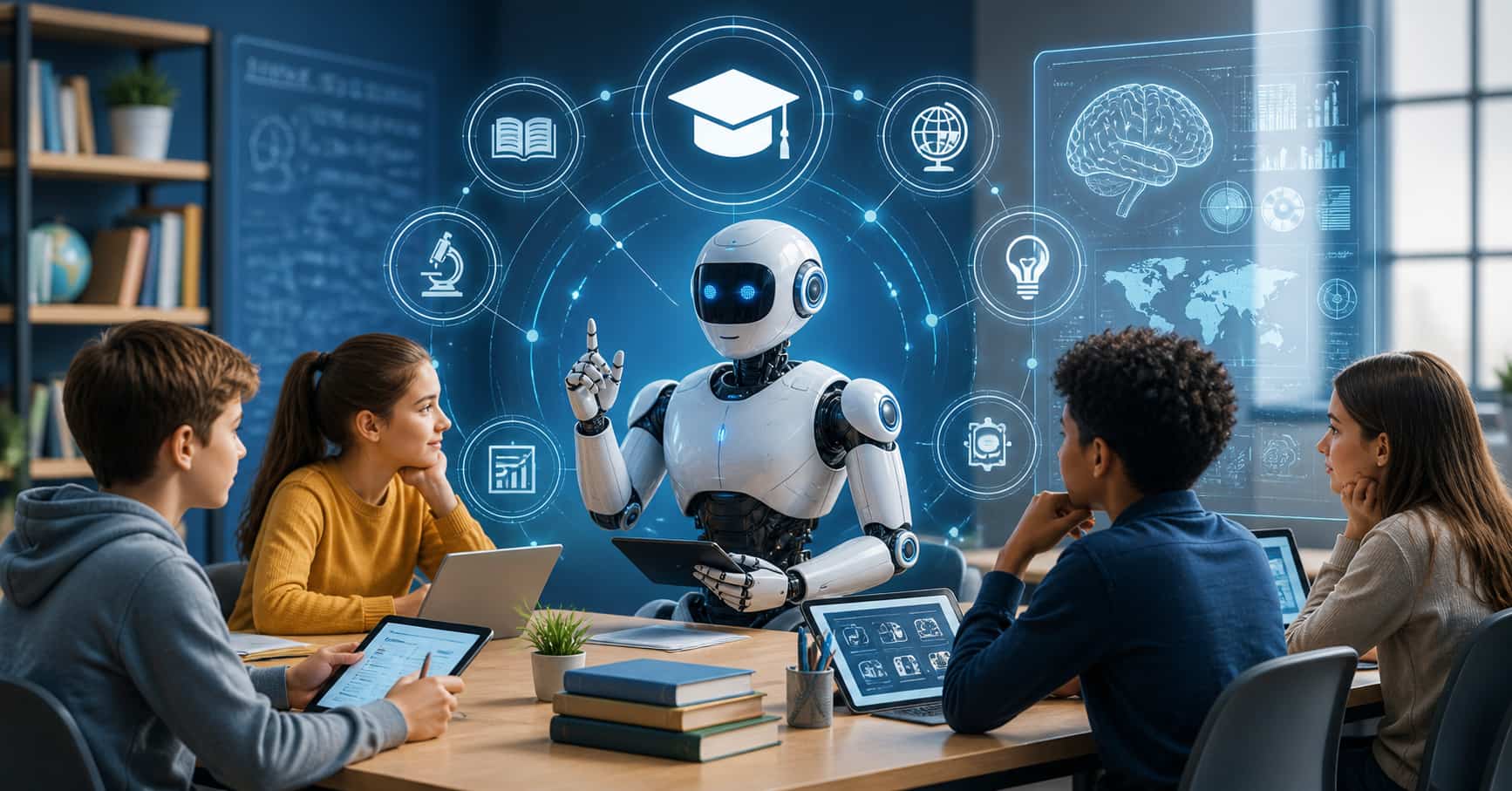
AI in Education: Advantages, Disadvantages & Future Trends
Introduction
Artificial Intelligence (AI) is rapidly transforming various sectors, and education is no exception. The integration of AI in educational settings promises to enhance learning experiences, tailor educational content, and streamline administrative tasks. However, as with any technological advancement, there are both advantages and disadvantages associated with its adoption. In this article, we will explore how AI is being utilized in education, the benefits and challenges it presents, and the potential future trends that could further reshape educational landscapes.
Advantages of AI in Education
AI technology offers numerous benefits that can revolutionize educational experiences. Here are some of the key advantages:
- Personalized Learning: AI can analyze individual student performance and learning habits to provide customized content and resources that cater to each student's needs.
- Efficiency and Automation: Routine tasks such as grading and scheduling can be automated with AI, freeing up time for educators to focus on teaching and student interaction.
- Accessibility: AI-powered tools can help make learning more accessible to students with disabilities by offering tailored assistance and adapting resources to meet diverse needs.
- Engagement: Through interactive AI tools like chatbots and virtual assistants, students can receive immediate feedback and engage in a more interactive learning process.
- Data-Driven Insights: AI can provide educators and institutions with valuable insights based on data trends to improve educational outcomes and refine curriculums.
Disadvantages of AI in Education
Despite its numerous benefits, the use of AI in education also comes with several challenges:
- High Costs: Implementing AI technology can be expensive, making it less accessible for underfunded schools or developing countries.
- Dependence on Technology: Over-reliance on AI could lead to a decrease in traditional learning methods and critical thinking skills among students.
- Data Privacy Concerns: The use of AI involves large amounts of data, raising concerns about privacy and the security of student information.
- Limited Human Interaction: While AI can handle many aspects of education, it cannot replace the emotional support and guidance that human teachers provide.
- Technological Barriers: Inequities in access to technology can widen the educational divide between different socio-economic groups.
Future Trends in AI and Education
The future of AI in education looks promising, with several emerging trends likely to further enhance learning environments:
- Advanced Personalized Learning: AI systems will become more sophisticated in understanding student emotions and learning styles, leading to even more personalized learning experiences.
- Immersive Learning with AR and VR: Combining AI with augmented reality (AR) and virtual reality (VR) will create immersive learning experiences that are both engaging and effective.
- Intelligent Tutoring Systems: These systems will evolve to provide real-time, personalized tutoring and feedback to students, potentially even replacing some traditional teaching methods.
- Global Learning Platforms: AI-driven platforms will facilitate global classrooms where students from different parts of the world can learn together and interact in real-time.
- Automated Administrative Operations: AI will streamline more administrative tasks, allowing educational institutions to operate more efficiently at lower costs.
Conclusion
The integration of AI in education offers both exciting opportunities and notable challenges. As this technology continues to evolve, it is essential for educators, policymakers, and technologists to collaborate and ensure that AI enhances the educational experience without compromising the human touch or equity of access. The future of AI in education depends on our ability to harness its potential responsibly and inclusively, paving the way for innovative educational practices that benefit all learners.



Comments (0)