
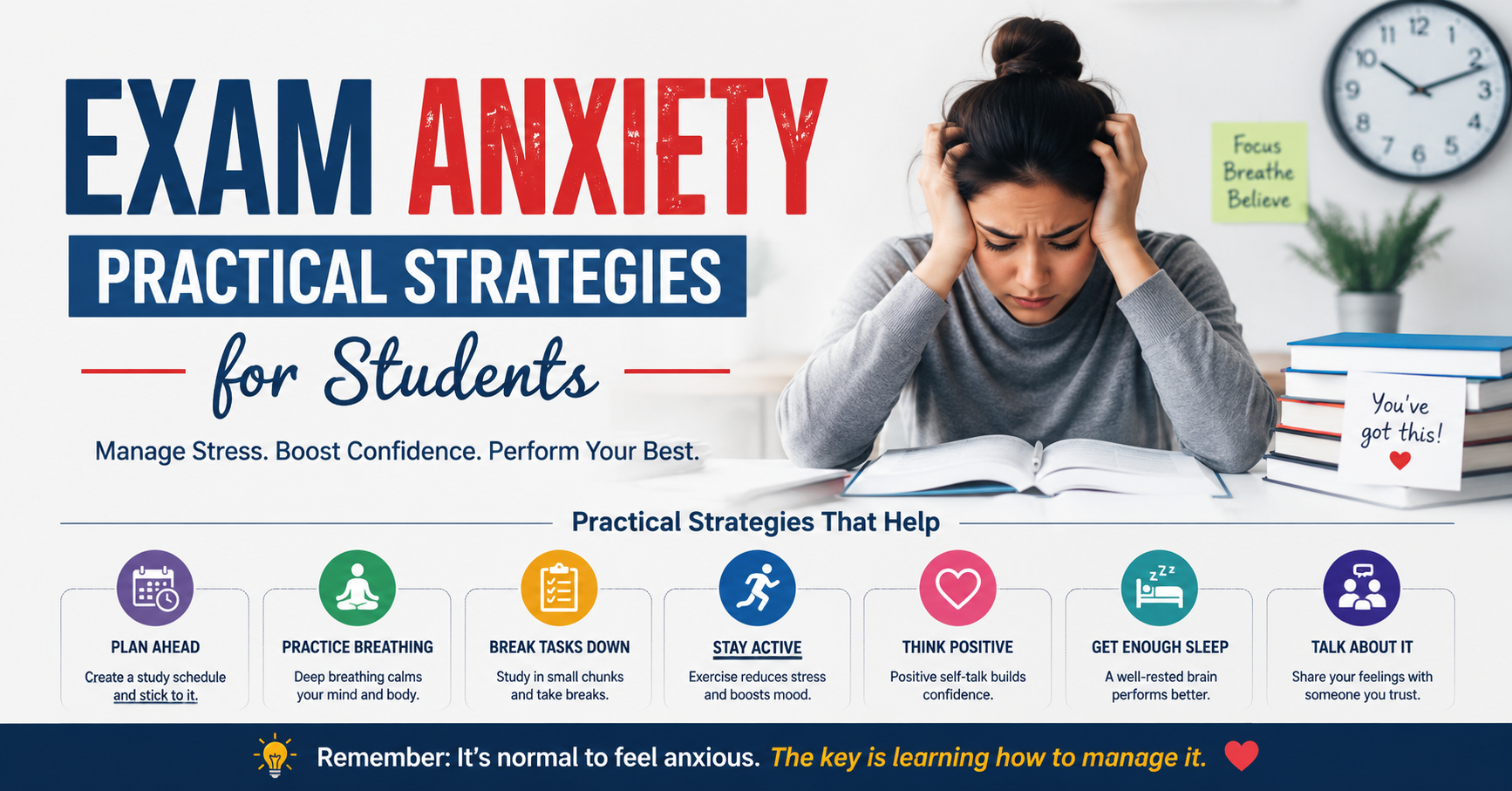
Exam Anxiety: Practical Strategies for Students
Exam anxiety is a common issue that affects a significant number of students across all levels of education. It can manifest as undue stress, nervousness, and even physical symptoms, which can negatively impact performance. Understanding and implementing practical strategies can help manage this anxiety, allowing students to perform their best during exams.
Understanding Exam Anxiety
Before tackling exam anxiety, it's important to understand what it is and why it occurs. Anxiety in the context of exams is typically a reaction to anticipated stress, often rooted in fear of failure, lack of preparation, or previous bad experiences with exams. Symptoms can range from butterflies in the stomach to severe panic attacks, and they can impede one's ability to concentrate and recall information.
Strategies to Manage Exam Anxiety
Managing exam anxiety involves several strategies that encompass preparation, mindset, and physical well-being. Here are some effective methods:
1. Thorough Preparation
Being well-prepared is the most effective antidote to exam anxiety. This means:
- Starting your revision early to avoid last-minute cramming.
- Organizing study materials and making a realistic revision schedule.
- Using varied revision techniques such as mind maps, quizzes, and past papers.
2. Learning Relaxation Techniques
Relaxation techniques can reduce both the physical and psychological symptoms of exam anxiety. Techniques include:
- Deep breathing exercises to help maintain calm.
- Progressive muscle relaxation to reduce physical tension.
- Mindfulness meditation to enhance present-moment awareness.
3. Developing a Positive Mindset
How you think about exams can significantly affect your anxiety levels. Positive thinking strategies involve:
- Challenging negative thoughts and replacing them with more constructive ones.
- Visualizing success to boost confidence and reduce fear.
- Setting realistic goals for studying and for the outcome of the exam.
For more in-depth resources and personalized support, visit learningamplified.ai .
4. Adequate Sleep and Nutrition
Physical health plays a crucial role in managing anxiety. Ensure:
- Getting 7-9 hours of sleep each night during the exam period.
- Eating balanced meals that are rich in nutrients which support brain function and energy levels.
- Avoiding excessive caffeine and sugar, which can increase feelings of anxiety.
5. Seeking Professional Help
If anxiety is severe and self-help strategies are not sufficient, it may be helpful to seek professional advice. This can include talking therapies, such as cognitive-behavioral therapy (CBT), which has been shown to be effective in managing anxiety.
Conclusion
Exam anxiety is a formidable challenge, but it is one that can be overcome with the right strategies and mindset. By preparing thoroughly, utilizing relaxation techniques, fostering a positive outlook, maintaining good physical health, and seeking help when necessary, students can significantly reduce their exam anxiety and enhance their academic performance. Remember, the goal is to manage anxiety, not eliminate it completely, as a certain level of stress can actually be motivating and improve performance.



Comments (0)