
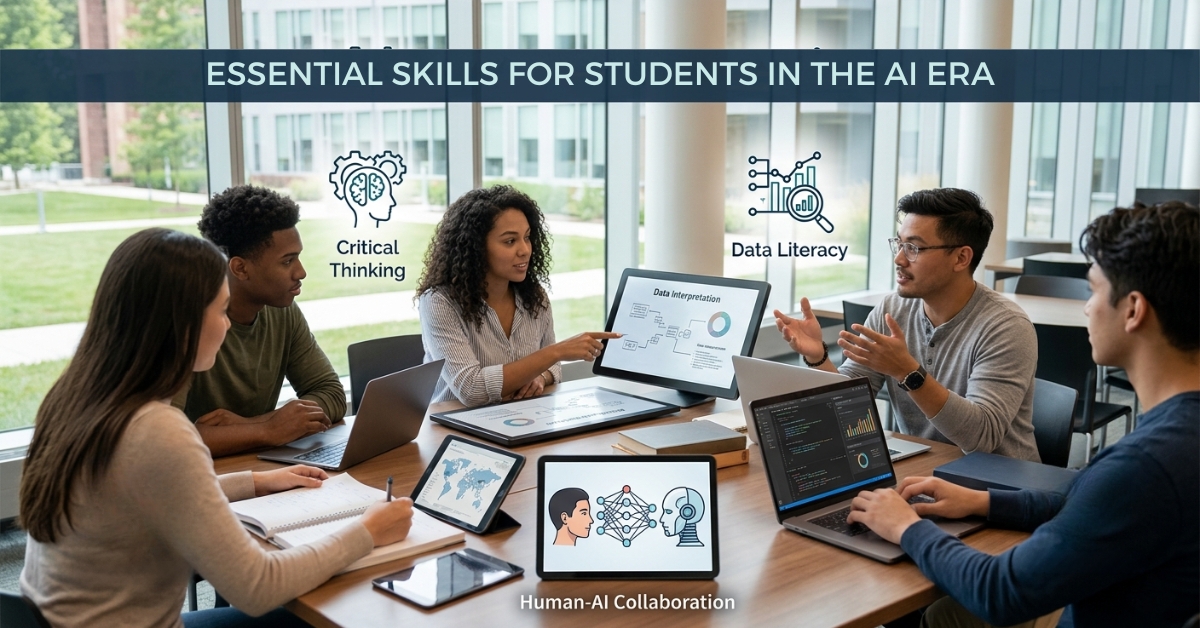
Essential Skills for Students in the AI Era
As artificial intelligence (AI) continues to evolve and integrate into various sectors, it is imperative for educational systems to equip students with skills that will enable them to thrive in this new era. The AI revolution is not only reshaping job markets but also the skills required to excel in them. Below, we explore key skills that are becoming essential for students in the AI-driven world.
Problem-Solving and Critical Thinking
AI excels in handling routine and repetitive tasks, but complex problem-solving and critical thinking are areas where human intelligence still reigns supreme. Students need to develop strong analytical skills and the ability to approach problems from multiple angles. This can be fostered through project-based learning and real-world challenges that encourage innovative thinking.
Data Literacy
In an era where data is king, being literate in data handling, analysis, and interpretation is crucial. Students should be taught how to read, understand, and manipulate data, as well as derive meaningful insights from it. Courses in statistics, data science, and data visualization will become increasingly important in the curriculum of the future.
Technical Proficiency
Understanding the basics of how AI and related technologies work will be fundamental. This doesn’t mean everyone needs to become a programmer, but having a basic understanding of coding, algorithms, and how machines learn can provide a significant advantage. Introducing students to coding through languages like Python, which is widely used in AI, can be a good start.
Creativity and Innovation
While AI can optimize existing ideas, creating something entirely new often requires human creativity. Encouraging creativity isn’t just about art and music; it’s about thinking differently and being innovative in problem-solving. Schools should nurture this by allowing students to pursue personal projects and by integrating creative arts into the technology curriculum.
Emotional Intelligence
As machines take over more cognitive tasks, emotional intelligence (EI) will become a differentiator for human workers. Skills such as empathy, communication, and understanding are hard for machines to replicate. Teaching students to excel in these interpersonal skills will prepare them for leadership roles and positions that require a human touch.
Adaptability and Continuous Learning
The rapid pace of technological change means that the ability to adapt and continually learn new skills is more important than ever. Students must be comfortable with change and uncertainty, ready to pick up new skills as needed. This mindset should be encouraged through a flexible curriculum and opportunities to learn outside the traditional classroom setting.
Ethical Understanding and Responsibility
Finally, as AI continues to impact society in profound ways, an understanding of ethics in technology becomes crucial. Students should be taught the ethical implications of AI, including issues of bias, privacy, and the broader impacts on society. Encouraging debates and discussions around these topics can help prepare responsible citizens and innovators.
In conclusion, the AI era demands a rethinking of the skills that are emphasized in our educational systems. By focusing on problem-solving, data literacy, technical proficiency, creativity, emotional intelligence, adaptability, and ethical responsibility, we can prepare students not only to succeed in their careers but also to lead in the creation of a balanced and equitable society where technology serves humanity.



Comments (0)