
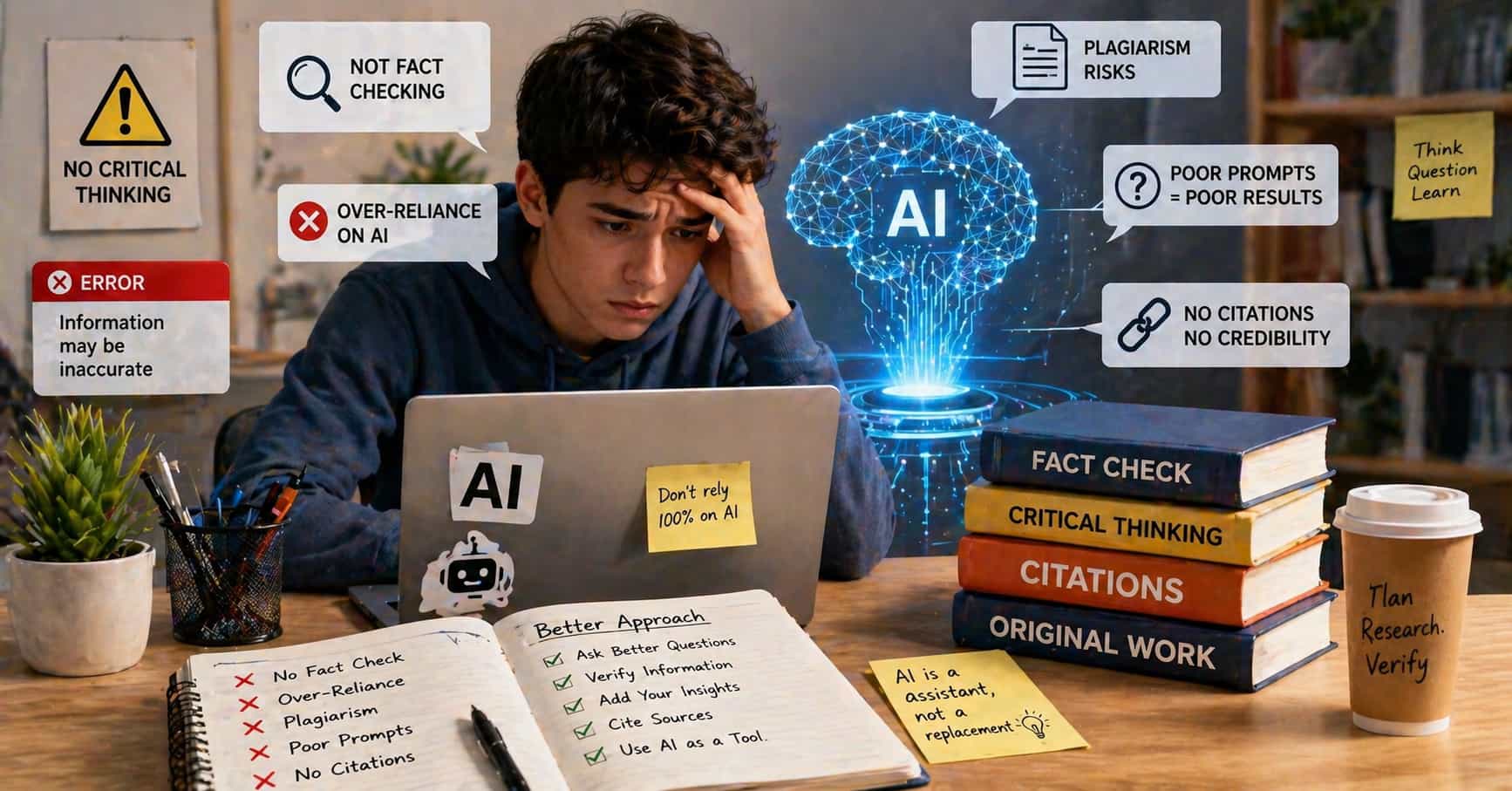
Common Mistakes Students Make While Using AI Tools
As artificial intelligence (AI) continues to evolve and integrate into various sectors, educational tools powered by AI are becoming increasingly common in classrooms and home learning environments. While these tools offer revolutionary benefits, their effectiveness largely depends on how they are used. Here, we explore some common pitfalls students encounter when leveraging AI tools for education.
Over-Reliance on AI for Learning
One of the most significant issues is the tendency of students to become overly reliant on AI tools. AI can provide answers to complex questions in seconds, but relying too much on these answers can hinder the development of critical thinking and problem-solving skills. It's crucial for students to use AI as a support tool rather than a substitute for their own intellectual efforts.
Misinterpreting AI Outputs
AI tools process information based on algorithms and pre-fed data, which can lead to errors or biased outputs. Students might accept these outputs without question, leading to misunderstandings or the propagation of incorrect information. Critical evaluation of AI-generated content is essential to ensure accuracy and reliability.
Ignoring Data Privacy Concerns
Many AI educational tools require personal information to tailor learning experiences. However, not all students are aware of or understand the implications of data privacy. It's important for users to know what data is being collected, how it's being used, and the measures in place to protect their information.
Underutilizing AI Tools' Features
AI tools often come packed with a range of features designed to enhance learning, such as adaptive learning paths, interactive content, and progress tracking. Not fully utilizing these features can lead to a suboptimal learning experience. Students should explore all functionalities to maximize the potential benefits of their AI tools.
Lack of Engagement with Material
AI tools can make learning more efficient, but this sometimes results in a passive learning attitude where students might skim through material without fully engaging. To combat this, learners should aim to interact with the learning material actively, complementing AI usage with traditional learning methods like note-taking and group discussions.
Not Updating or Upgrading AI Tools
Like any software, AI tools require updates to function optimally. Neglecting software updates can lead to compatibility issues or missed opportunities for improved functionality. Regularly updating AI tools ensures that students benefit from the latest advancements in AI technology.
Conclusion
AI tools are powerful aids in the educational process, but their effectiveness is contingent upon proper use. By being aware of and avoiding these common mistakes, students can enhance their learning experience, ensuring that they not only consume educational content more effectively but also develop essential critical thinking and problem-solving skills. For more insights on leveraging technology in education, visit LearningAmplified.



Comments (0)