
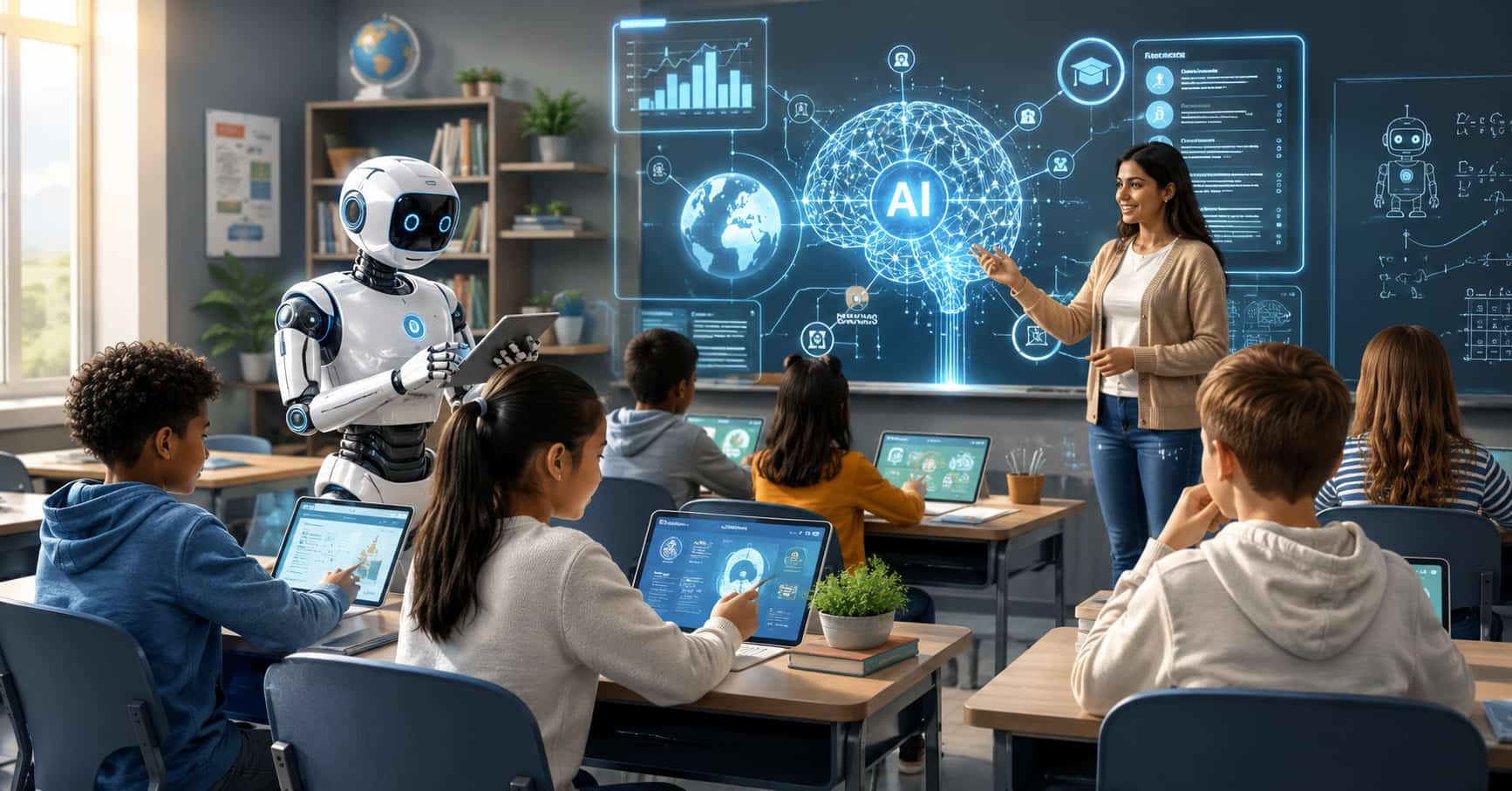
Can AI Replace Teachers? The Truth Explained
The debate over whether Artificial Intelligence (AI) can replace teachers is gaining momentum with the rapid advancement in technology. As AI systems become more sophisticated, it's crucial to explore their potential roles in education. This article delves into the capabilities of AI, its current and potential future applications in the educational sector, and how it compares with human educators.
Understanding AI's Role in Education
AI's integration into education isn't a new concept. Tools like automated grading systems, personalized learning experiences, and AI tutors have been in use for years. These technologies are designed to assist both students and teachers by providing support tailored to individual learning speeds and styles.
For example, AI-driven platforms like Khan Academy and Coursera offer personalized learning paths that adapt to the learner's performance. AI can quickly analyze large sets of educational data to identify trends and provide insights that help educators enhance their teaching strategies and improve student outcomes.
Can AI Fully Replace Teachers?
Despite AI's impressive capabilities, it's important to recognize its limitations. AI lacks the human touch necessary for teaching more than just facts or processes. Education is inherently a social process that involves emotional intelligence, understanding, empathy, and interpersonal relationships, which AI currently cannot fully replicate.
Teachers do more than impart knowledge; they inspire, motivate, and understand student emotions. For instance, a teacher can identify a student's frustration or boredom and modify the lesson plan accordingly. AI, however, operates on algorithms and predefined data sets and lacks the ability to perceive these subtle cues.
Complementing Rather Than Replacing
The most realistic perspective on AI in education is that it serves as a complement to human instructors, not a replacement. AI can handle administrative tasks, grade assignments, and even offer tutoring in specific subjects. This allows teachers to dedicate more time to addressing complex student needs, fostering critical thinking, and facilitating emotional and social growth.
Moreover, AI can offer invaluable support in special education, where tailored educational plans and continuous engagement are crucial. It can provide repetitive practice and feedback that is essential for learning but is often exhausting for human teachers to sustain.
Challenges and Ethical Considerations
Reliance on AI in education also introduces several challenges and ethical considerations. Data privacy is a significant concern, as educational tools collect vast amounts of personal data on students. Additionally, there's the risk of algorithmic bias where AI might develop biases based on the data it's trained on, potentially leading to unfair educational practices.
These issues necessitate strict regulations and ethical guidelines to ensure AI is used responsibly in educational contexts.
Conclusion
In conclusion, while AI is transforming education in many beneficial ways, it is not poised to replace teachers entirely. The role of AI should be seen as supportive, enhancing the educational experience and alleviating certain pressures from teachers, rather than eliminating the need for human educators. As we advance, it is crucial to balance technological integration with the irreplaceable human elements that define educational excellence.
For more insights on the impact of AI in various sectors, visit our website at learningamplified .

Comments (0)