
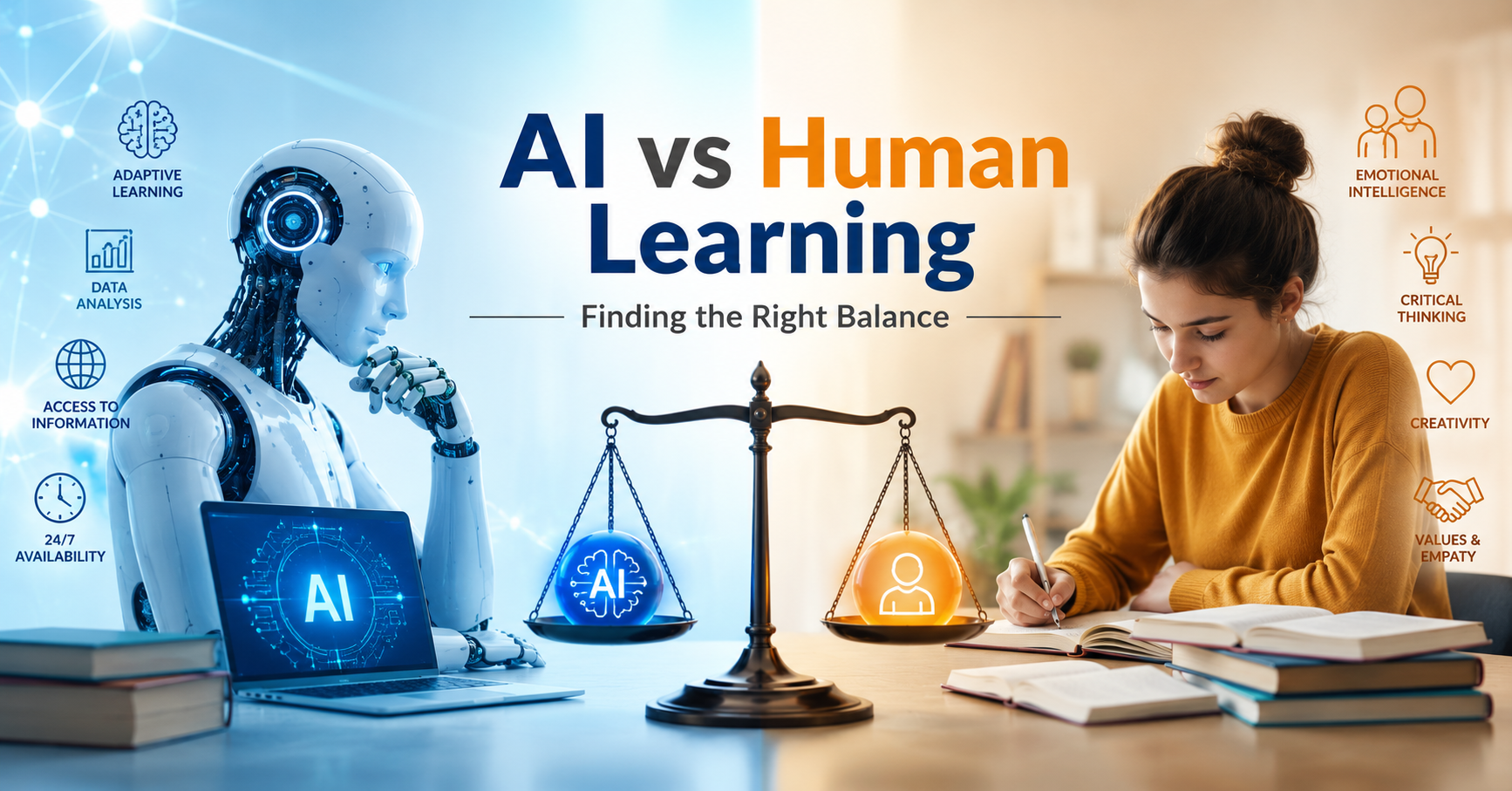
AI vs Human Learning: Finding the Right Balance
In the rapidly evolving landscape of education, the integration of artificial intelligence (AI) into learning processes is a topic of growing importance. As technology advances, the question of finding the optimal balance between AI and human learning becomes increasingly pertinent. This article delves into the benefits and challenges associated with each type of learning, and explores how to effectively combine them to enhance educational outcomes.
The Advantages of AI in Learning
AI brings a multitude of advantages to the educational sector. Its ability to process and analyze large amounts of data at an unprecedented speed allows for a more personalized learning experience. AI systems can quickly identify a student’s strengths and weaknesses, tailoring the educational material accordingly. This level of customization was unimaginable with traditional learning methods.
Furthermore, AI can provide immediate feedback, a crucial factor in educational settings. Unlike traditional setups where students might have to wait days or even weeks for feedback, AI systems can offer instant responses to students’ inputs. This immediacy can accelerate learning and adjustment processes, making education more efficient and effective.
Human Learning: The Irreplaceable Elements
Despite the impressive capabilities of AI, human learning encompasses aspects that are currently beyond the reach of technology. Emotional intelligence, moral reasoning, and complex problem-solving in unpredictable scenarios are areas where humans excel. Human interaction in the learning process fosters social skills and emotional development—elements that are crucial for holistic education but are not addressed by AI.
Moreover, teachers and educators play a key role in motivating students and inspiring passion and curiosity about subjects. The mentorship and guidance provided by humans are critical in shaping not just academic but personal growth of individuals.
Combining AI and Human Learning
The integration of AI and human learning should not be viewed as a competition but as a collaboration. Each has its strengths and limitations, and the goal is to leverage these features to create a more enriched learning environment. For example, AI can handle the heavy lifting of data processing and basic skills training, while human educators can focus on more complex tasks like fostering critical thinking and creativity in students.
For more insights into integrating AI with traditional educational methods, visit our website at learningamplified.ai .
Practical Applications in Education
Several educational institutions have begun experimenting with this hybrid approach. AI-driven platforms are being used to teach languages, mathematics, and science, with adaptive learning technologies that cater to the pace and understanding of each student. Simultaneously, educators are focusing more on seminars, discussions, and interactive sessions that require human presence and emotional intelligence.
This blend not only improves cognitive skills but also emotional and social skills, ensuring a well-rounded educational experience.
Challenges in Achieving the Right Balance
Finding the right balance between AI and human learning is fraught with challenges. The cost of implementing advanced AI systems can be prohibitive for many institutions. There is also the risk of over-reliance on technology, which might diminish the value of human interaction in learning.
Moreover, there are ethical considerations about data privacy and the extent of AI’s role in shaping young minds. Educational institutions need to address these concerns transparently and thoughtfully to harness the benefits of AI without compromising on ethical standards.
Conclusion
As we march towards a more technologically integrated future, the balance between AI and human learning will continue to be a critical topic in educational discussions. By understanding and addressing the unique benefits and challenges of both AI and human elements in education, we can strive to create an effective, balanced learning environment that prepares students not just for the workplace but for life. The goal is not to replace teachers with machines but to use AI as a tool that enhances the teaching process, making education more impactful and accessible to all.

Comments (0)