
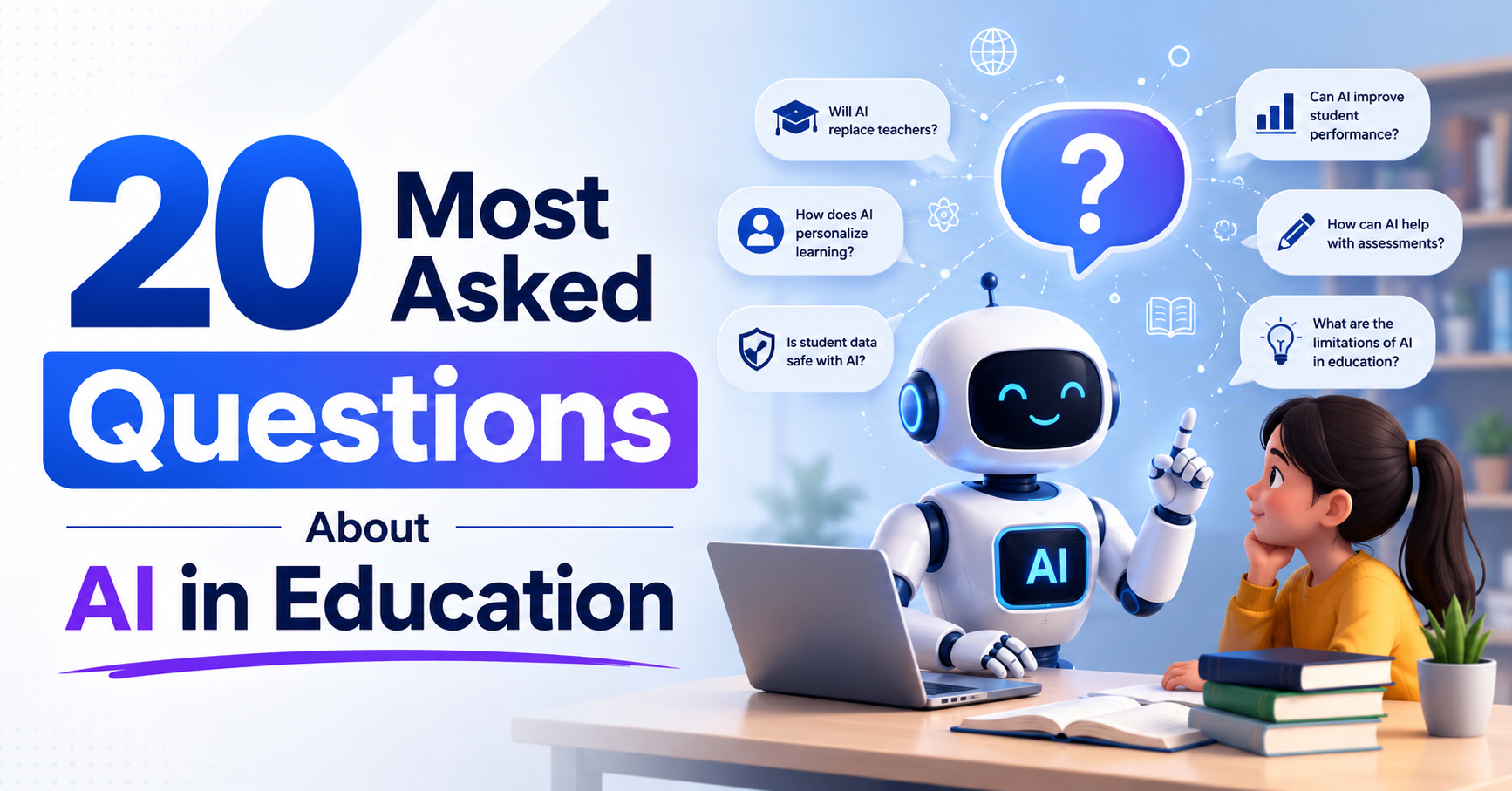
20 Most Asked Questions About AI in Education
Artificial Intelligence (AI) is rapidly transforming industries around the world, and education is no exception. From personalized learning paths to automated administrative tasks, AI is set to revolutionize how educational systems operate. Here are the 20 most asked questions about AI in education, providing insights into its current impact and future potential.
1. What is AI in Education?
AI in education refers to the application of artificial intelligence technologies to facilitate learning, improve teaching methodologies, and streamline educational operations. This includes adaptive learning systems, AI tutors, data-driven insights for personalized learning experiences, and automation of administrative tasks.
2. How Can AI Improve Personalized Learning?
AI enhances personalized learning by analyzing student data to tailor educational content and pacing to individual needs. It allows for the creation of personalized learning paths, where students can learn at their own pace and style, significantly improving engagement and outcomes.
3. What Are the Benefits of AI for Teachers?
AI can assist teachers by automating routine tasks, providing real-time insights into student performance, and suggesting interventions. This not only saves time but also enables teachers to focus more on teaching and less on administrative tasks.
4. Are There Any Privacy Concerns With AI in Education?
Yes, the use of AI in education raises significant privacy concerns, particularly regarding the handling and storage of student data. Ensuring data protection and compliance with regulations like GDPR is crucial.
5. Can AI Replace Teachers?
No, AI is not likely to replace teachers but is designed to augment their capabilities. By handling administrative duties and offering support for personalized learning, AI allows teachers to devote more attention to pedagogical strategies and student interaction.
6. How Does AI Help with Educational Assessment?
AI can automate the grading process, provide detailed analytics on student performance, and identify areas where students struggle the most. This real-time feedback is invaluable for both students and educators for timely intervention.
7. What Role Does AI Play in Special Education?
In special education, AI technologies can offer customized solutions that cater to the specific needs of learners with disabilities, such as adaptive learning tools and speech-to-text capabilities, making learning more accessible.
8. How Can AI Impact Online Learning?
AI significantly enhances online learning by providing interactive and personalized experiences. AI-driven analytics help in creating dynamic content that adapts to the learner's pace and understanding, improving engagement in a virtual learning environment.
9. What Are the Challenges of Implementing AI in Education?
The main challenges include high costs of implementation, a lack of understanding of AI technologies, data privacy issues, and the need for substantial infrastructure changes.
10. How Is AI Used to Enhance Language Learning?
AI enhances language learning through natural language processing tools that offer real-time corrections, conversational practice, and personalized feedback, helping learners improve their language skills more efficiently.
11. Can AI Help Reduce Bias in Education?
While AI has the potential to reduce human bias in assessments and admissions, it can also perpetuate existing biases if not properly programmed. Careful design and continuous monitoring are essential to ensure AI tools promote fairness.
12. How Does AI Contribute to Classroom Management?
AI can help in classroom management by monitoring student engagement and behavior patterns, providing insights that help teachers manage classroom dynamics more effectively.
13. What Is the Future of AI in Education?
The future of AI in education looks promising, with ongoing advancements leading to more sophisticated applications. The focus will likely be on more intuitive AI that can predict student needs and adapt teaching methods accordingly.
14. How Can AI Facilitate Lifelong Learning?
AI facilitates lifelong learning by providing scalable and accessible learning resources that individuals can use at different stages of their life, adapting to their changing learning needs and schedules.
15. What Are the Ethical Considerations of AI in Education?
Key ethical considerations include the need for transparency, ensuring student data privacy, the risk of dependency on technology, and the need to address potential biases in AI algorithms.
16. How Does AI Influence Educational Policy?
AI influences educational policy by providing data-driven insights that can help shape more effective educational strategies and reforms. Policymakers are increasingly considering AI's potential to address educational challenges at both local and global levels.
17. Can AI Enhance Creativity in Students?
AI can enhance creativity by providing tools that help students explore and create in new ways, such as virtual reality environments and interactive simulations that encourage creative thinking and problem-solving.
18. How Does AI Support Remote Learning?
AI supports remote learning by offering tools that ensure the learning process remains engaging and interactive, even in a non-traditional learning environment. This includes providing personalized content, real-time feedback, and interactive learning sessions.
19. Are AI-Driven Tutoring Systems Effective?
AI-driven tutoring systems are effective in providing additional support outside the classroom, offering personalized attention and adapting to the student's learning pace, significantly improving learning outcomes.
20. What Are the Limitations of AI in Education?
The limitations of AI in education include the potential for technical issues, the high cost of implementation, and the challenge of integrating AI seamlessly with existing educational practices.
Conclusion
AI is set to be a transformative force in education, offering numerous benefits from personalized learning to efficient classroom management. However, its implementation comes with challenges and ethical considerations that must be addressed to fully harness its potential. As we continue to integrate AI in educational contexts, it is crucial to balance technological advancements with human insight and oversight to create an inclusive, effective, and fair educational environment.

Comments (0)